



The 20th Session of the Semen Analysis Standardization and Quality Control Training Program Successfully Concludes
Adhering to the pedagogical model of "theory as the foundation, hands-on practice, and a quality control loop," the curriculum covered standardized operating procedures (SOPs) for routine semen analysis, morphological assessment, QC data analysis, and practical discussions. Instructors provided meticulous, hands-on correction for every operational detail—from specimen collection and mixing to chamber loading, counting, and morphological classification—strictly following the WHO Laboratory Manual for the Examination and Processing of Human Semen (6th ed.) and national industry standards.
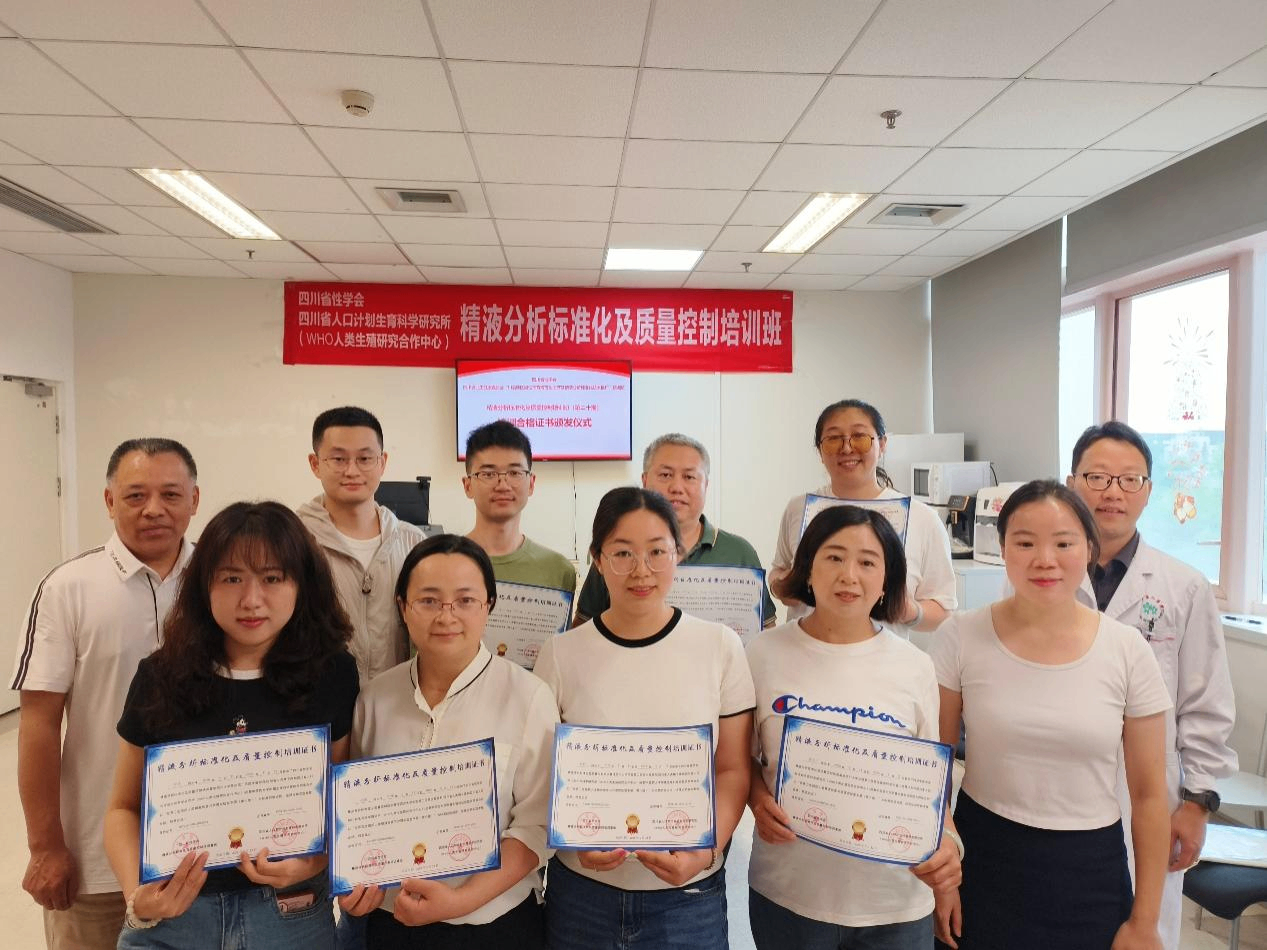
After systematic training and repeated practical calibration, participants achieved remarkable progress:
Sperm concentration measurement: The coefficient of variation (CV) among participants dropped from 25.65% pre-training to 10.81% post-training—a reduction of over 57%.
Morphological analysis: The CV decreased sharply from 85.07% pre-training to 34.27% post-training—a reduction of nearly 60%.
The significant decline in CV values indicates substantially reduced inter-operator variability, ensuring higher comparability and stability of test results. This is the core objective of semen analysis standardization and a crucial guarantee for reliable clinical diagnosis and fertility-related decision-making.
A Banner, A Testament of Recognition
At the conclusion of the course, the trainees presented the instructors with a ceremonial banner inscribed with:
"Meticulous testing for better fertility outcomes; skilled mentors nurturing new professionals."
This banner serves as a profound "recognition report" from frontline laboratory practitioners. It affirms the instructors' rigorous scholarship, patience, and dedication to teaching, while praising their ability to transform complex reproductive testing techniques into practical, masterable skills.


